
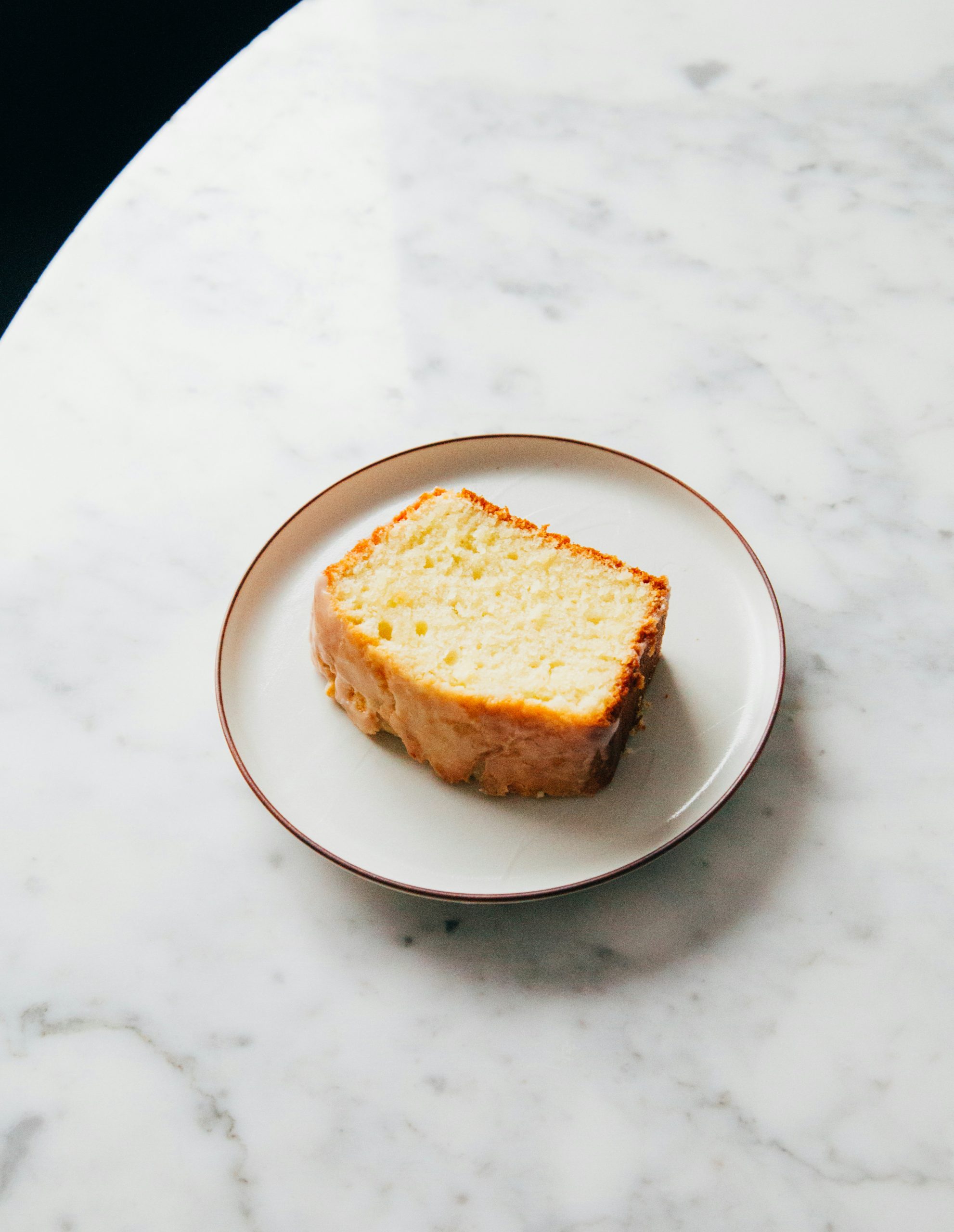
One pound of butter. One pound of sugar. One pound of eggs. One pound of flour. Therecipe is so simple it tells you the name out loud.
The most honest cake in the cookbook
Most desserts have names that don’t tell you what’s in them. Black Forest cake isn’t from a forest. Chocolate chip cookies kind of bury the lede, they’re really butter cookies with chocolate in them.
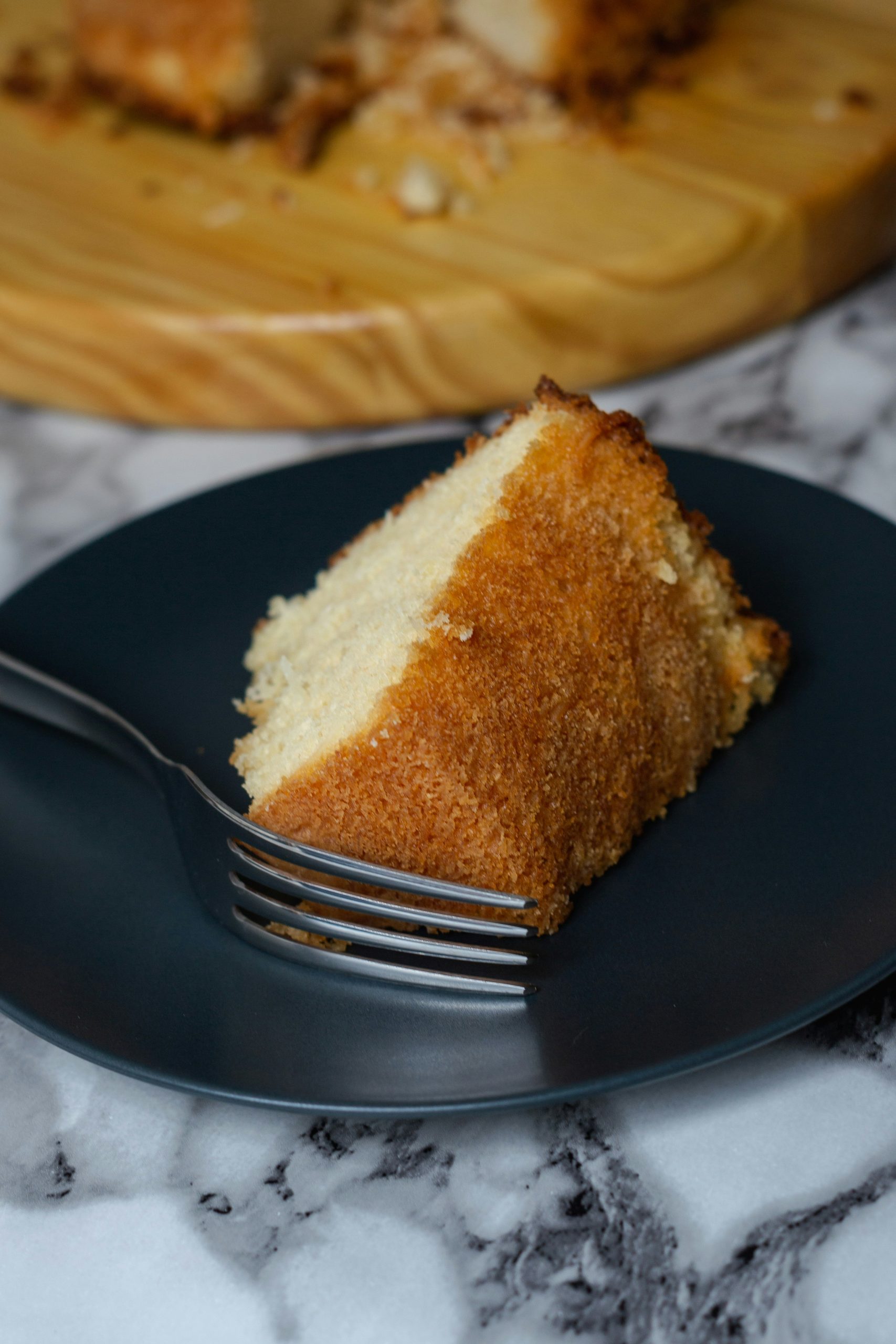
Pound cake just says it. The recipe, when it was first written down in the 1700s, was four words long: a pound of each. A pound of butter, a pound of sugar, a pound of eggs, a pound of flour. That’s it. No baking powder, no vanilla, no salt, no shortcuts. Mix the four ingredients, bake the result, you’ve made pound cake.
This is the only dessert in the Western canon whose name is also the entire recipe. We find that delightful.
A brief history of a long loaf
The first written pound cake recipe appears in The Complete Housewife, an English cookbook published in 1727 (yes, the same year a French diplomat smuggled coffee seeds into Brazil; coffee and pound cake have been linked for a long time). By the 1740s, the recipe had crossed the Atlantic to colonial America, where it became the workhorse dessert of the early republic.
There’s a real reason for that. Colonial American kitchens didn’t have measuring cups. They had a scale, and they had a butter churn, and they had hens, and they had a flour barrel. The pound cake recipe worked because it used the units the kitchen already operated in. You could double or halve it without thinking. You could quadruple it if the church social was Sunday. You could explain it to your daughter in one sentence and she’d remember it the rest of her life.
The other thing pound cake had going for it: shelf life. A loaf made from those four ingredients, in those proportions, stays edible for about a week on the counter. The high butter and sugar content acts as a preservative. Households would bake one on Thursday and slice from it until the next Thursday. That’s part of why we still bake on Thursdays. We didn’t invent the schedule. We inherited it.
How the recipe got better (and how it stayed the same)
The original 4-pound, four-ingredient recipe makes a slightly heavy, slightly dense loaf. Modern bakers (us included) make a few small additions that the colonial bakers couldn’t:
- Baking powder, invented in the 1840s. A small amount lightens the crumb without changing the flavor.
- Vanilla, became affordable in the 1880s. A teaspoon adds warmth.
- A pinch of salt, to make everything taste like more of itself.
That’s it. Those are the only updates worth making. Anything else (oil instead of butter, milk powder, “natural flavoring”) makes the cake worse. Our Classic Vanilla Bean is just the original recipe scaled down, plus real Madagascar vanilla bean folded in. It tastes the way a pound cake tasted in 1850, golden, dense, sweet, simple, because that’s how pound cake should taste.
The reason “Grandma’s pound cake” is always the best cake at the family reunion is not nostalgia. It’s that grandma was using a recipe that worked in 1850, worked in 1950, and still works now. You can’t improve on the math.
Where we take liberties
The original recipe is the floor. The fun is in what you add.
Lemon Glaze
For our Lemon Glaze Pound Cake, we fold fresh lemon zest into the batter and pour a hot lemon-sugar glaze over the loaf while it’s still warm. The glaze soaks into the top half-inch and crystallizes into a tangy crust. This isn’t a modern invention either, lemon pound cake recipes show up in 19th-century American cookbooks, and there’s a southern variant called “lemon icebox cake” that’s basically the same idea served chilled. We don’t chill ours. We slice it warm and serve it with iced tea or a bright Ugandan coffee.
Brown Butter Chocolate Chip
For our Brown Butter Chocolate Chip Pound Cake, we take the most foundational ingredient (the pound of butter) and improve it before it touches the bowl. Browning the butter, slowly melting it until the milk solids caramelize at the bottom of the pan, adds a roasted, nutty, slightly toffee like flavor. Then we fold in dark chocolate chunks and sprinkle flaky sea salt on top. This is not a 1750 recipe. This is a 2010 recipe imposed on a 1750 framework, and it works because the framework was right to begin with.
You add things to pound cake. You don’t subtract. That’s the rule.
How to serve a pound cake (it matters)
Here’s the part most people get wrong: don’t serve it cold.
A pound cake out of the fridge tastes like 70% of a pound cake. The butter is solid, the vanilla is sleeping, the chocolate chunks are hard, the lemon glaze doesn’t quite shimmer. Take the loaf out of the fridge and let it sit on the counter for at least 20 minutes before slicing. Half an hour is better.
Slice it thick, three-quarters of an inch, minimum. Pound cake is meant to be eaten in deliberate slabs, not little sliver portions. Serve it with a strong dark coffee or a glass of cold milk. If you want to be fancy, add a spoon of whipped cream and a few macerated strawberries. If you don’t want to be fancy, you don’t need to be. A slice on a plate with a cup of coffee is the most pound cake can ask of you.
Bake on Thursday, eat all week
We bake every loaf on Thursdays. Pickup orders are ready Friday morning, and the loaves keep beautifully for 5 – 7 days on the counter (wrapped in foil) or 2 – 3 weeks in the freezer (slice first, freeze the slices individually wrapped, then thaw in 20 minutes on the counter).
It’s an ancient recipe, scaled down to two pounds of finished loaf instead of four, baked one at a time, vacuum-sealed, and put in the mail.
That’s a lot of words to describe what is essentially a pound of butter and a pound of sugar in the same loaf. Which feels right to us.
→ Shop pound cake · or pair one with a single-origin coffee and have us pack them in the same box.


Leave a Reply