Wine drinkers have been telling everyone about “terroir” for a hundred years. It’s time coffee got the same treatment.
A confession
For most of coffee’s history, the bag at the grocery store didn’t tell you anything except the brand. “Folgers.” “Maxwell House.” That was it. Whether the beans came from Vietnam or Colombia or some warehouse off I-95, nobody knew, and the bag wasn’t telling.
Then in the 1990s some specialty roasters started doing what wine had done for ages: putting the origin on the label. Suddenly coffee bags said things like “Ethiopia Yirgacheffe washed natural” and customers had to learn what any of that meant. That’s where we are now. So let’s actually learn it.
A coffee’s flavor isn’t random. It’s the sum of three things working together: where the bean was grown, how it was processed, and how it was roasted. We control the roast. The farmer controls the processing. But the where, the place, that one’s interesting. Because the same coffee plant produces wildly different beans depending on where it lives.
Elevation: the most important number on the bag
If the bag says an elevation in meters, that’s the number to pay attention to.
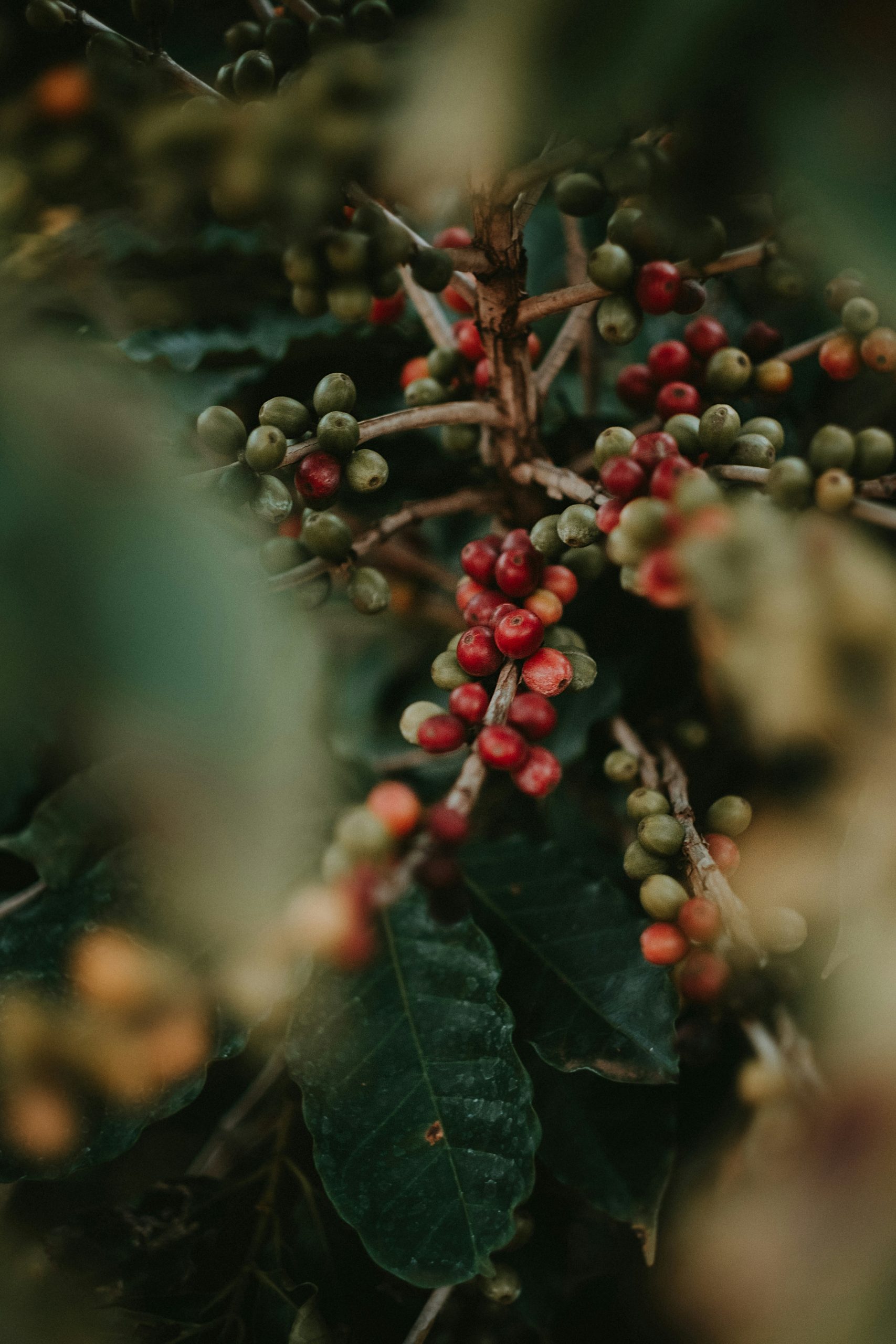
Coffee grows between sea level and about 2,200 meters above it (7,200 feet). Higher altitudes = colder temperatures = slower bean maturation. A bean that takes 9 months to ripen at 1,800 meters develops more complex sugars and acids than the same bean at 800 meters that ripens in 5. Higher elevation coffee tends to taste:
- Brighter. More acidity. Think lemon, berry, or floral notes.
- More complex. Multiple flavors layered on top of each other.
- More expensive. Slower growth = fewer cherries per tree = higher price per bag.
Lower elevation coffee tends to taste:
- Smoother. Less acidity. More body.
- Simpler. One or two clear notes (chocolate, nut, caramel).
- More approachable. What most people think “good coffee” tastes like.
Our Uganda Cocoa & Floral comes from the Rwenzori foothills at 1,500-1,800 meters. That elevation is why the cocoa is layered with a floral top note, instead of just being chocolatey. Our Brazil, Nutty & Chocolate is from the Cerrado Mineiro at 900-1,200 meters. That lower elevation is exactly why it drinks like a hot chocolate.
Neither is better. They’re just different. A bright high grown coffee for a Saturday morning when you want to taste something. A smooth low grown coffee for a Wednesday at 6 a.m. when you just want a cup of coffee.
Soil: volcanic does what volcanic does
The world’s best coffees almost all grow in volcanic soil. That’s not romantic talk, it’s chemistry. Volcanic soil is dense in potassium, phosphorus, and minerals like sulfur and zinc. Coffee plants love it. The result is more vibrant, mineral rich beans.
Central American countries, Guatemala, Costa Rica, Honduras, Nicaragua, are essentially a chain of volcanoes, which is a big part of why they punch above their weight in specialty coffee. Our Honduras Buttery & Chocolate comes from Marcala, a town sitting on the flank of an extinct volcano. The buttery body? That’s the soil talking.
Brazil’s main coffee region (the Cerrado) is mostly volcanic too, but it’s older and more weathered, which is part of why Brazilian coffee tends to be smoother and less acidic than its Central American neighbors.
Climate and processing: dry versus washed
Once the cherries are picked, the farmer has to get the beans out of the fruit. There are two main ways:
- Washed (or “wet”) process, strip the fruit off mechanically, ferment the beans in water for a day or two to dissolve the sticky sugars, then dry. Produces cleaner, brighter, more acidic coffees. Works best where there’s plenty of water and predictable rainfall.
- Natural (or “dry”) process, leave the cherries whole and let them dry on raised beds for a few weeks. The fruit sugars seep into the bean. Produces fruitier, wilder, more wine like coffees. Works best in dry climates where mold isn’t a risk.
A washed Ethiopian and a natural Ethiopian from the same farm can taste like cousins from opposite branches of the family. Both ours and most coffees we sell are washed, it’s the cleaner showcase of an origin’s actual character.
The unfair stereotype that’s mostly true
We talked about this in our coffee origins post, but it bears repeating: there’s a real reason a “typical” cup of African coffee tastes different from a “typical” cup of Central American coffee. The growing conditions are genuinely different.
African coffees (Ethiopia, Kenya, Uganda, Rwanda, Burundi): Often tend toward bright, fruity, floral, berry toned. The high elevations and equatorial sun produce dense beans with complex acidity. The Uganda we sell is the gentler end of this; an Ethiopian Yirgacheffe would be the loud end.
Central American coffees (Guatemala, Honduras, Costa Rica, Nicaragua, El Salvador): Often tend toward balanced, sweet, chocolate and nut, caramel toned. Volcanic soils, washing processing, and moderate elevations produce reliable crowd pleasers. Our Honduras is dead center in this style.
South American coffees (Brazil, Colombia, Peru): Often tend toward smooth, low acid, nutty, chocolatey. Lower elevations and bigger farms make for a more approachable, less polarizing cup. Our Brazil is the archetype.
Indonesian coffees (Sumatra, Java, Sulawesi): Heavy, earthy, sometimes funky. A special processing method called “wet hulled” gives them a low acid, deeply savory profile that you either love or strongly don’t.
Why we don’t sell an Indonesian (yet)
Indonesian coffees are great, Sumatran Mandheling is a personal favorite, but they’re polarizing. The earthy, mushroom-y notes that some drinkers love, others actively dislike. We try to keep the regular lineup populated with coffees that will please 90% of cups poured. The Roaster’s Reserve is where we play with the wilder origins (a natural Ethiopian one month, a wet hulled Sumatran the next, a honey processed Costa Rican when the lot is good enough).
If a Sumatran ever shows up there, you’ll know, and now you’ll know why it tastes like the floor of a damp forest in the best possible way.
How to use this when you order
Three quick rules of thumb:
1. If you want bright, complex, “wake me up and amaze me” coffee: look for African origins at 1,500m+. Our Uganda is the gentle gateway. 2. If you want approachable, hot chocolatey, “just give me a cup” coffee: look for South American or lower elevation Central American. Our Brazil or Honduras. 3. If you want something you’ve never had before: Roaster’s Reserve. We picked it because the lot was unusual.
→ Shop by origin · or grab a Roaster’s Reserve and let us send you something you haven’t tasted yet.

Leave a Reply